Adoption engine
Builds repeatable rhythms for AI practice, from launch moments to sustainment.
AI adoption and enablement portfolio
I design adoption programs, practitioner labs, enablement content, and feedback loops that make complex tools understandable, usable, and measurable.
Role fit
The AI Adoption and Enablement Lead role needs someone who can run the practical adoption engine: forums, content, practitioner guidance, feedback synthesis, and leadership-ready signals.
Builds repeatable rhythms for AI practice, from launch moments to sustainment.
Facilitates forums where people leave with clearer next actions, not just awareness.
Turns questions, friction points, and field signals into themes leaders can act on.
Creates practical guides, labs, activities, and communication assets that stay usable over time.
Uses stakeholder empathy, behavior targets, and adoption evidence to make change concrete.
Connects program activity to progress, risks, outcomes, and business value.
Selected work
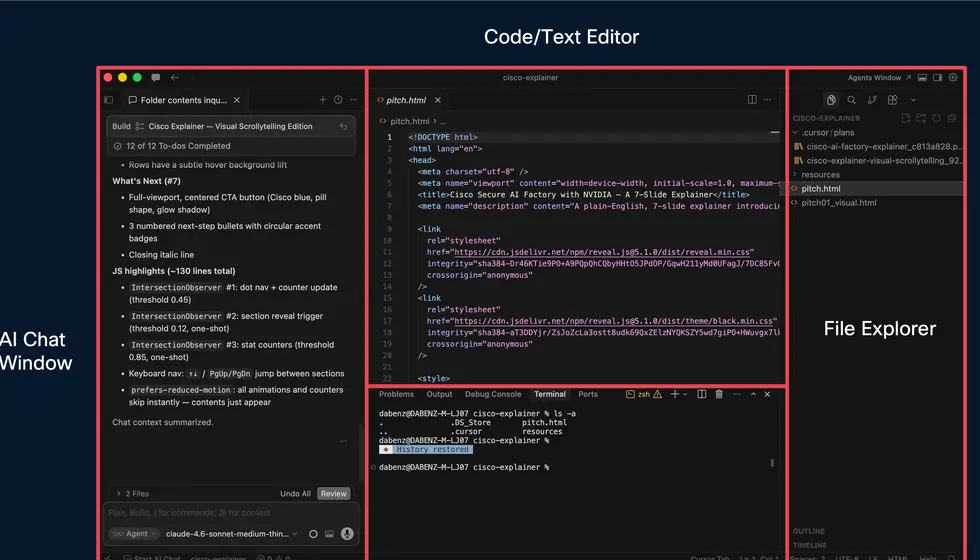
Featured AI enablement sample
Hands-on labs where practitioners use AI coding tools to plan, build, preview, and iterate projects such as a newcomer-friendly explainer.
Maps directly to AI practitioner enablement, tool confidence, repeatable operating cadence, and sustained behavior change.
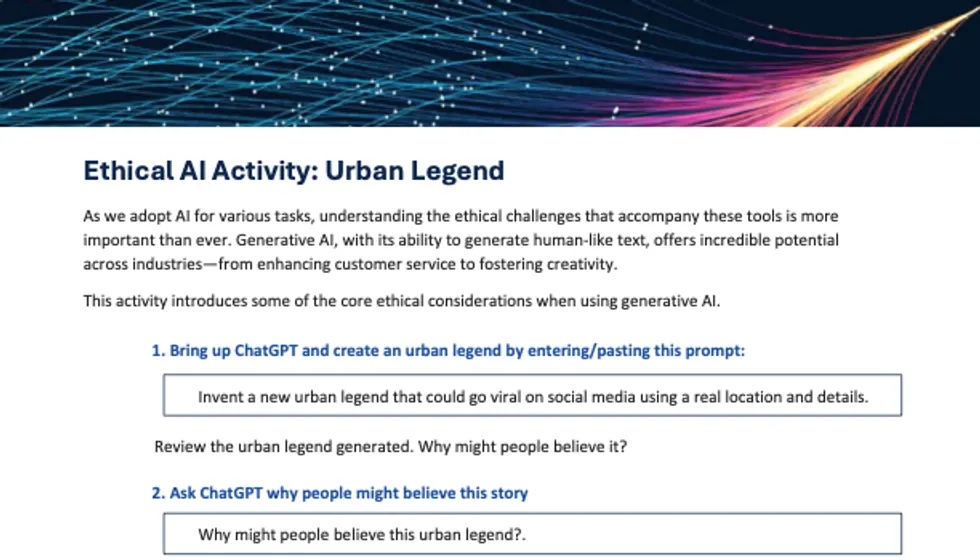
AI adoption learning journey
An introductory activity from an Adopting AI learning journey that helps participants explore misinformation, bias, privacy, harmful content, and manipulation.
Useful evidence for AI misconception management, practical adoption content, and responsible-use enablement.
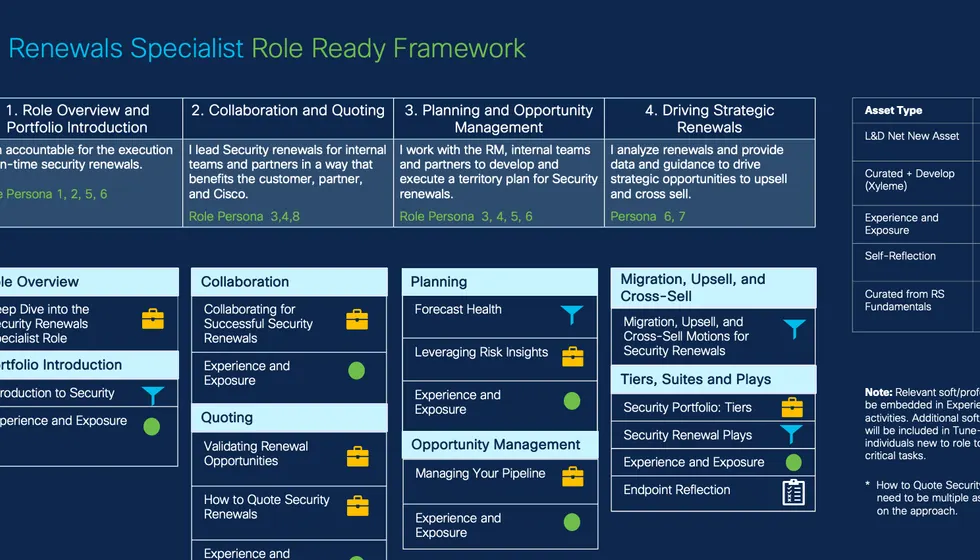
Security renewals specialist enablement
A role-based onboarding redesign that shifted learning away from broad technical coverage and toward the work new hires needed to perform in the first 90 days.
Shows stakeholder influence, performance-centered design, mentor enablement, and adoption outcomes.
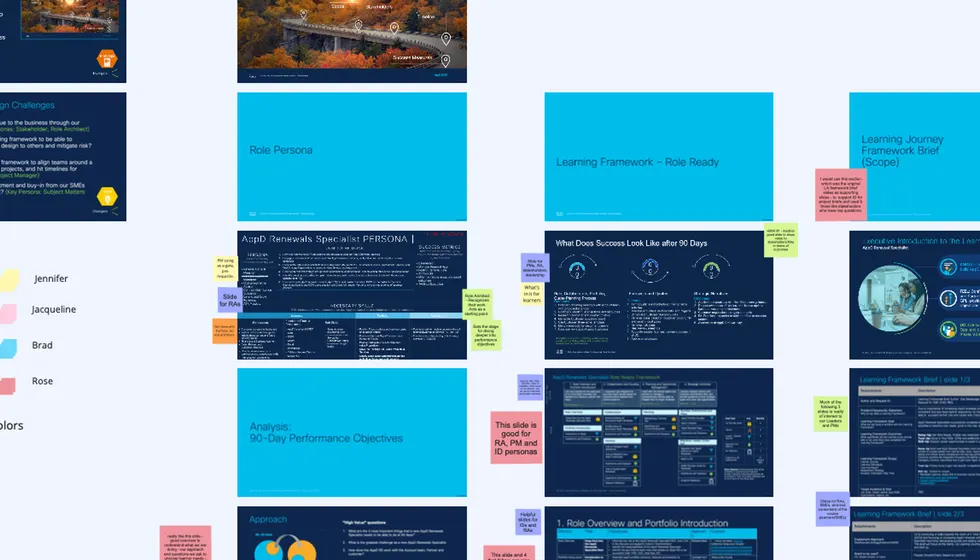
Design thinking and operating model
A redesign effort that used stakeholder personas, empathy maps, design challenges, and prototypes to make a learning framework faster and more useful.
Shows pragmatic OCM habits: empathy, process design, stakeholder clarity, and reusable enablement standards.
Field adoption and feedback synthesis
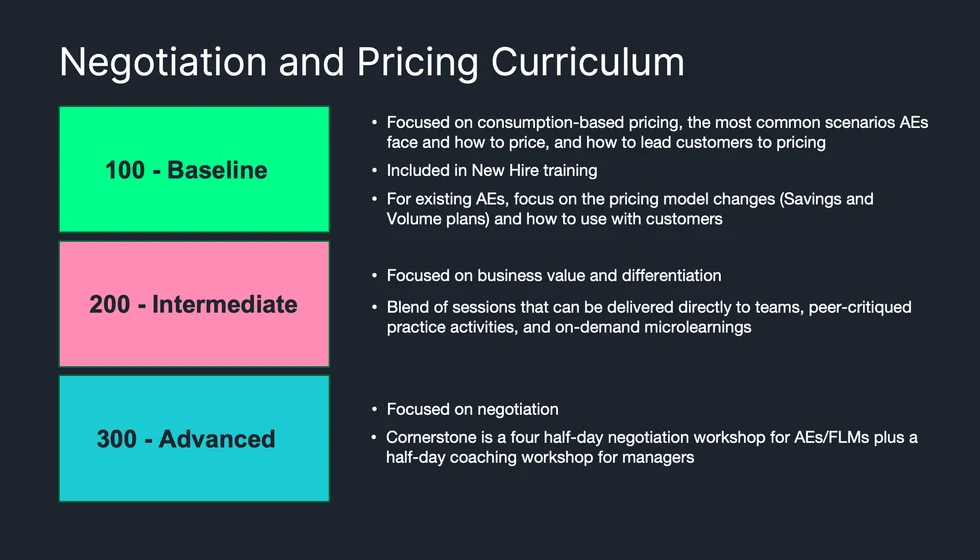
A curriculum built with pricing and field teams to help account executives position a new consumption pricing model and negotiate without jumping straight to discounts.
Shows adoption signal gathering, cross-functional partnership, field feedback loops, and business-value storytelling.
How I run adoption
Adoption is not a one-time training event. The work is to create a steady system that helps people try, learn, ask better questions, and keep improving.
Translate strategy into the specific practitioner actions that should change.
Run forums, labs, sessions, and communications as a living operating rhythm.
Use artifacts, examples, prompts, and role-ready activities so people can see what good looks like.
Track questions, misconceptions, participation, and moments where usage breaks down.
Turn recurring patterns into recommendations for product, platform, AI, and leadership partners.
Refresh content and operating rhythms as maturity, tooling, and business priorities change.
Next conversation
This site is intentionally focused for the AI Adoption and Enablement Lead role: less archive, more signal.